
Description

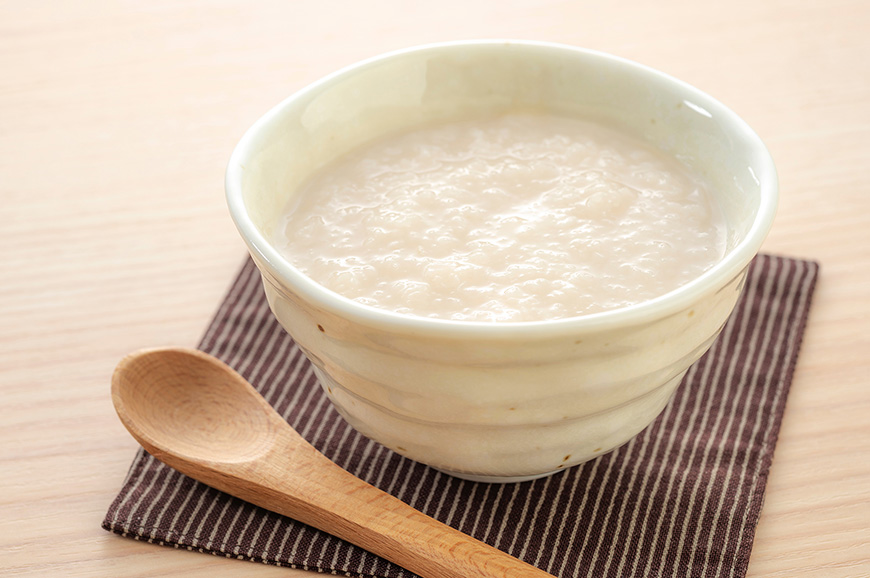
| L’amazake, dont les origines remontent au moins à la période Nara (710–794 apr. J.-C.), est une boisson fermentée traditionnelle japonaise.
Le mot amazaké est formé des termes japonais ama (甘), « doux » ou « sucré », et sake (酒), qui désigne une boisson fermentée. Lors de la saccharification, les enzymes naturellement présentes dans le koji transforment l’amidon du riz en sucres simples, donnant naissance à une préparation naturellement douce, à la texture onctueuse. L’amazaké possède une multitude d’utilisations culinaires. Son goût délicatement sucré et sa grande polyvalence ont contribué à sa popularité durable au Japon et, de plus en plus, dans le reste du monde. Notre amazaké est élaboré artisanalement, non pasteurisé, afin de préserver toute sa richesse aromatique. |
Amazake, whose origins date back at least to the Nara period (710–794 AD), is a traditional Japanese fermented beverage. Our amazake is produced using the traditional Hayazukuri (早造り甘酒) method, exclusively from rice koji and water. During saccharification, the enzymes naturally present in the koji convert the rice starch into simple sugars, creating a naturally sweet preparation with a smooth, creamy texture. Amazake is remarkably versatile in the kitchen. Its delicate sweetness and remarkable versatility have contributed to its enduring popularity in Japan and, increasingly, around the world. Our amazake is handcrafted and unpasteurised to preserve its full aromatic richness. |
Pistes de recherche:
Kurahashi, A. (2021). Ingredients, functionality, and safety of the Japanese traditional sweet drink amazake. Journal of Fungi, 7(6), 469. https://doi.org/10.3390/jof7060469
Kageyama, S., Inoue, R., Hosomi, K., Park, J., Yumioka, H., Suka, T., Kurohashi, Y., Teramoto, K., Syauki, A. Y., Doi, M., Sakaue, H., Mizuguchi, K., Kunisawa, J., & Irie, Y. (2021). Effects of malted rice amazake on constipation symptoms and gut microbiota in children and adults with severe motor and intellectual disabilities: A pilot study. Nutrients, 13(12), 4466. https://doi.org/10.3390/nu13124466
Kurahashi, A., Enomoto, T., Oguro, Y., Kojima-Nakamura, A., Kodaira, K., Watanabe, K., Ozaki, N., Goto, H., & Hirayama, M. (2021). Intake of koji amazake improves defecation frequency in healthy adults. Journal of Fungi, 7(9), 782. https://doi.org/10.3390/jof7090782
Michio Sata, Y. N. (2013). Effect of a late evening snack of amazake in patients with liver cirrhosis: A pilot study. Journal of Nutrition & Food Sciences, 03(05). https://doi.org/10.4172/2155-9600.1000223
Nakano, H., Setoguchi, S., Kawano, K., Miyagawa, H., Sakao, K., & Hou, D.-X. (2023). Effects of amazake produced with different aspergillus on gut barrier and microbiota. Foods, 12(13), 2568. https://doi.org/10.3390/foods12132568
Ueda M., Kitagawa M., Koike S., Yamamoto T., Kondo S. Effect of intake of Amazake on skin barrier functions in healthy adult women subjects—A randomized, double-blind, placebo-controlled study. Jpn. Pharmacol. Ther. 2017;45:1811–1820.
Yoshizaki, Y., Kawasaki, C., Cheng, K.-C., Ushikai, M., Amitani, H., Asakawa, A., Okutsu, K., Sameshima, Y., Takamine, K., & Inui, A. (2014). Rice koji reduced body weight gain, fat accumulation, and blood glucose level in high-fat diet-induced obese mice. PeerJ, 2, e540. https://doi.org/10.7717/peerj.540


Avis
Il n’y a pas encore d’avis.